Cash vs. Financing vs. Leasing: Which Is Right for You?
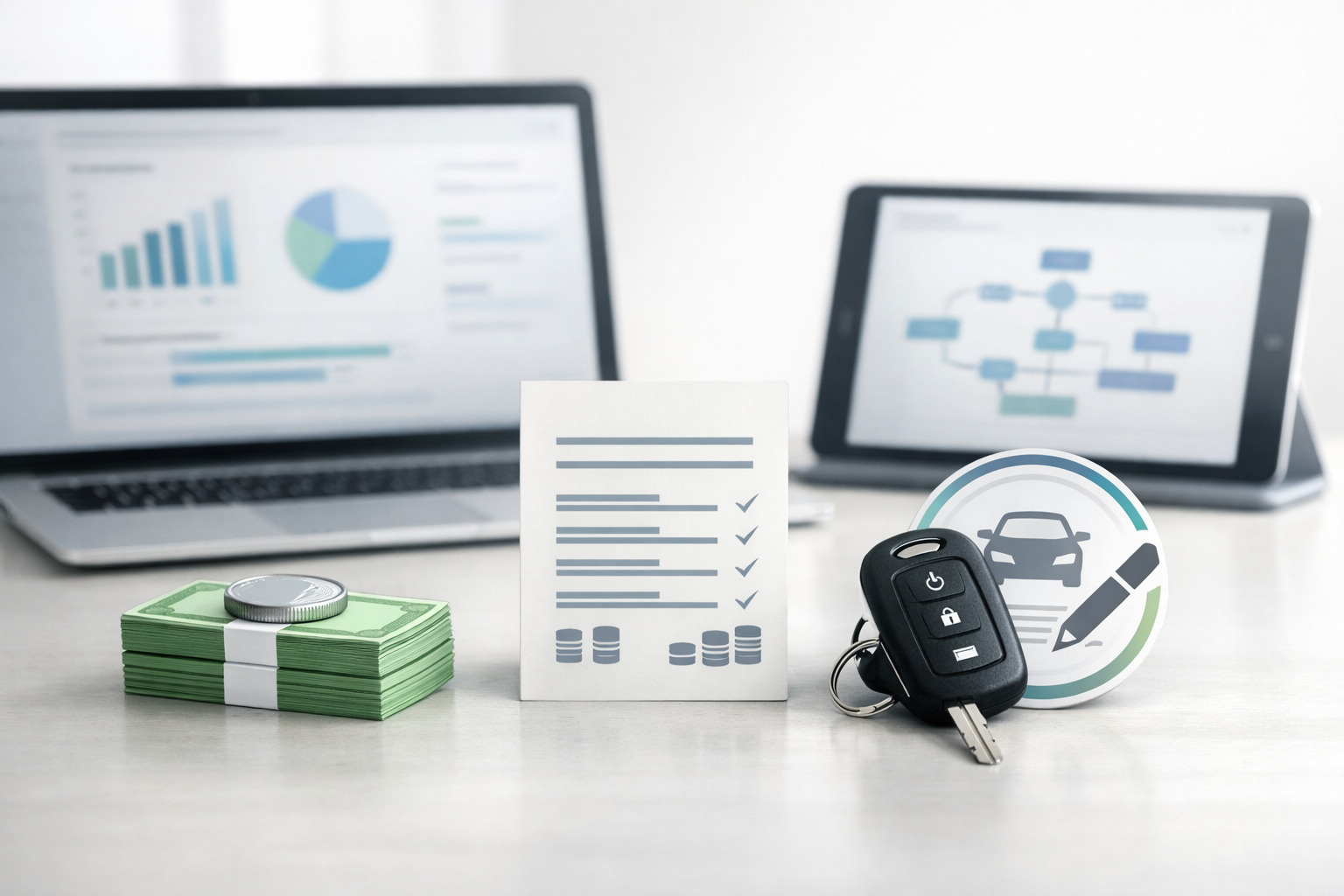
In 2026, car buyers face more options—and more financial complexity—than ever before. Whether you're considering a car cash purchase, looking into vehicle financing, or evaluating car leasing, each payment method has trade-offs shaped by interest rates, your credit score, and the evolving car market.
Car financing options in 2026 are influenced by rising loan rates and inflation. Leasing vs buying decisions are impacted by tech upgrades and changing depreciation curves. And while paying upfront means no debt, it also affects liquidity.
This article compares the three main methods—cash, financing, and leasing—to help you decide which fits your situation in today’s economy.
Buying a Car with Cash in 2026: Pros and Cons
What does paying with cash mean?
Paying for a car in full means you transfer the entire purchase price at once—no loans, no interest, no monthly payments. You get immediate full ownership and a clean title.
✅ Pros of a cash car purchase in 2026
No interest payments: You avoid rising APR costs.
No loan approval needed: Useful if your credit score is low or unestablished.
Resale flexibility: You own the vehicle outright, making private party sales easier.
Peace of mind: No monthly debts or risk of loan default.
❌ Cons of buying a car with cash
High capital outlay: It ties up a large amount of money in a depreciating asset.
Reduced liquidity: Less cash for emergencies, investments, or other expenses.
No leverage: You don’t benefit from low-interest environments.
No credit building: Paying with cash doesn’t help your FICO score.
When should you pay cash?
You have significant savings beyond the car price.
You plan to keep the car long-term.
You value simplicity and no-interest payment methods.
You want to avoid monthly outflows.
Financing a Car in 2026: What You Need to Know
How does car financing work in 2026?
Financing a car means taking out a loan from a bank, credit union, or car dealership to cover the vehicle’s price, minus your down payment. You repay the auto loan monthly, with added interest.
Key aspects of car loan options in 2026
Term | Range (2026) | Notes |
Interest Rate (APR) | 4.9% – 10.5% | Varies by credit score |
Loan Term | 36–84 months | Longer terms = lower payments, higher interest |
Down Payment | 10%–20% | Reduces total interest paid |
✅ Pros of car financing
Improves liquidity: Keep cash for investments or emergencies.
Credit building: On-time payments can raise your FICO score.
Access to newer models: Even with less cash upfront.
Flexible terms: Customizable loan durations and monthly costs.
❌ Cons of financing a car
Interest cost: You’ll pay more over time.
Approval requirements: Based on debt-to-income ratio and credit history.
Negative equity risk: Car depreciation may outpace loan payoff.
Monthly debt burden: Affects other loan approvals.
Who should finance?
You have a strong credit profile.
You want to build or diversify your credit.
You prefer cash flexibility.
You plan to keep the vehicle for 5+ years.
Leasing a Car in 2026: Is It Worth It?
What does leasing mean in 2026?
Leasing is a long-term rental (typically 24–36 months) where you pay for the depreciation rather than full ownership. You’ll return the car at the end of the lease term, unless you choose a buyout option.
✅ Pros of leasing a car in 2026
Lower monthly payments: Usually less than a loan for the same car.
Latest tech access: Lease every few years to stay up-to-date.
Maintenance coverage: Many leases include warranty coverage.
No resale hassle: Simply return the car.
❌ Cons of car leasing
Mileage limits: Usually 10,000–15,000 miles/year; excess mileage costs extra.
Wear-and-tear clauses: Dings, scratches, or interior damage can trigger fees.
No ownership: You build no equity in the vehicle.
Lease-end obligations: Pay disposition fees or early termination penalties.
Leasing is ideal for:
Drivers with predictable mileage habits.
Tech-savvy buyers who upgrade often.
Business owners using tax-deductible leases.
People who avoid long-term ownership responsibility.
Cash vs. Financing vs. Leasing: Total Cost Over Time
Total Cost of Ownership (TCO) comparison
To evaluate which payment method makes the most sense, assess the total cost of ownership over 3–6 years. This includes:
Purchase price or lease cost
Depreciation
Interest (for loans)
Insurance premiums
Maintenance
Opportunity cost of capital
Method | Avg. 5-Year Cost | Key Expense Areas |
Cash Purchase | $37,500 | Upfront payment, depreciation |
Financing | $42,800 | Interest, down payment, loan fees |
Leasing | $39,200 | Lease fees, mileage charges, no equity |
Opportunity cost example:
If you pay $35,000 cash, and could have earned 5% annually elsewhere, the opportunity cost is ~$9,200 over 5 years. That money could offset interest payments on a loan.
Car equity and sunk cost
Cash buyers gain immediate equity.
Financed vehicles build equity over time.
Leased cars offer no equity—you’re paying for usage only.
Which Option Fits Your Lifestyle: Cash, Finance, or Lease in 2026?
Choosing between cash, lease, or finance depends on how you drive, your financial goals, and your lifestyle.
Match your payment type to your profile:
Buyer Type | Best Option | Why |
High-income, stable saver | Cash | Avoid debt, full control, low mileage |
Young professional, credit building | Finance | Build credit, lower upfront cost |
Tech enthusiast, short-term user | Lease | Frequent upgrades, lower monthly payments |
Freelancer, irregular income | Cash | No risk of missed payments |
Business owner | Lease | Tax deductions, fleet management benefits |
Lifestyle questions to ask:
Do you drive more than 15,000 miles/year? → Leasing may be costly.
Do you keep cars for over 6 years? → Financing or cash makes sense.
Do you value ownership or flexibility? → Leasing offers low-commitment.
Do you need liquidity? → Avoid large cash purchases.
FAQs: Cash vs. Financing vs. Leasing – Common Buyer Questions in 2026
Is it better to pay cash or finance a car in 2026?
If you have strong liquidity and plan long-term ownership, pay cash. If you need flexibility and want to build credit, financing is smarter.
Does leasing hurt my credit?
Leasing involves a hard credit inquiry and monthly reporting. On-time payments help your credit score, but missed ones hurt it like any loan.
Can I exit a lease early?
Yes, but expect early termination penalties or exit fees. Some leases offer buyout options or allow lease transfers.
How does my credit score impact car financing?
A higher FICO score qualifies you for better APR, longer terms, and more favorable loan approval criteria.
Can I pay off my loan early?
Yes. Many auto loans allow early payoff, but check for prepayment penalties.
Is leasing a good idea in 2026?
Leasing is smart for tech lovers, short-term drivers, and those needing predictable costs. It’s not ideal for those who drive long distances or want ownership.
Recent Posts
Understanding Vehicle History Reports & Why They Matter
What Are Vehicle History Reports?A vehicle history report is a comprehensive document that tracks a...
Read More
How to Use SearchCarX Like a Pro: Tips for Faster, Smarter Vehicle Searches
What is SearchCarX and How Does It Work?SearchCarX is an AI-powered car search platform that helps b...
Read More
Top 10 Most Reliable Used Cars to Buy in 2026
Why does car reliability matter in 2026 used car purchases?Reliability directly reduces long-term co...
Read More
Why Online Car Tools Are Better Than Traditional Dealership Searches
What Are Online Car Tools in 2026?Online car tools are digital platforms or applications that allow...
Read More
Tips for Getting Approved for a Car Loan with Bad Credit
What Happens When You Apply for a Car Loan with Bad Credit?Bad credit doesn’t mean you can’t get a c...
Read More
How to Budget for a Car: Total Cost of Ownership Explained
Why Budgeting for a Car Goes Beyond the Sticker PriceTotal Cost of Ownership (TCO) defines the real...
Read More
Electric vs. Hybrid vs. Gas-Powered Cars: Pros, Cons, and What to Choose
What are the main differences between electric, hybrid, and gas-powered cars in 2026? Electric vehic...
Read More
Top Features to Look for in a Safe Car in 2026
A safe car in 2026 combines smart tech with crash-tested design. Vehicle safety has shifted from jus...
Read More
Top Mistakes to Avoid When Buying a Car Online
Online car buying in 2026 is easier, faster, and more popular than ever. Digital dealerships, auto m...
Read More