Electric vs. Hybrid vs. Gas-Powered Cars: Pros, Cons, and What to Choose
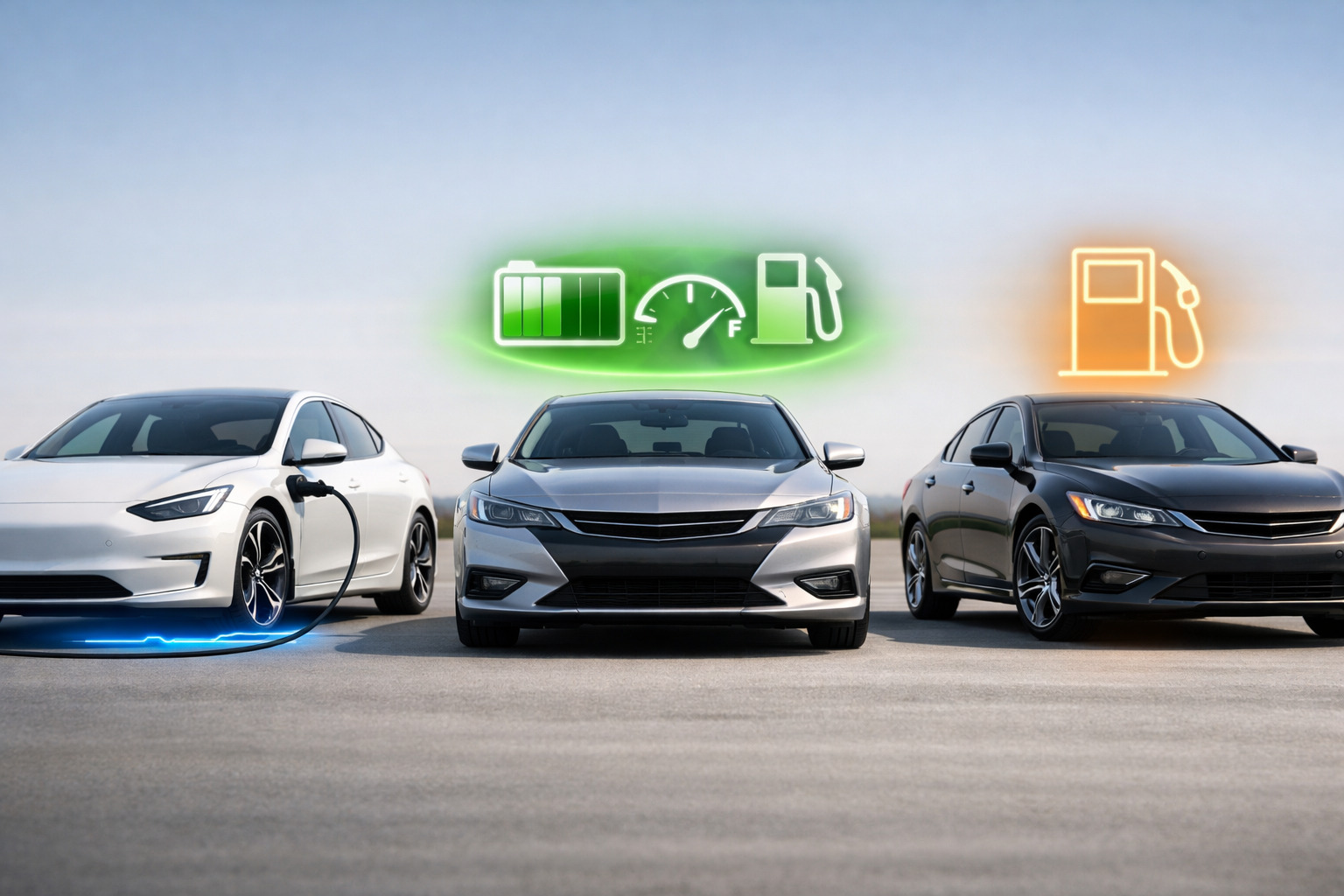
What are the main differences between electric, hybrid, and gas-powered cars in 2026? Electric vehicles (EVs), hybrids, and internal combustion engine (ICE) cars differ by how they power the drivetrain. Each uses distinct fuel types, technology, and emissions output.
Key Differences:
Drivetrain Type | Power Source | Tailpipe Emissions | Fuel Type |
Electric Vehicle | Battery-electric | None | Electricity (kWh) |
Hybrid Vehicle | Gas + Electric (dual engine) | Lower than ICE | Gasoline + Battery |
Gas-Powered Vehicle | Internal combustion engine | High | Gasoline/Diesel |
Electric vs Hybrid: EVs run fully on electricity, while hybrids combine both fuel and electric power.
Gas car vs EV: Gas vehicles are powered solely by fuel, producing higher tailpipe emissions and needing regular oil changes.
By comparing drivetrain systems, emissions, and fuel dependency, drivers in 2026 face a nuanced decision. Upcoming sections analyze each option in depth.
Electric Cars in 2026: Pros, Cons, and Use Cases
Are electric vehicles worth it in 2026? Yes, electric vehicles offer low operating costs, high efficiency, and reduced emissions. They suit urban drivers, commuters, and eco-conscious buyers.
EV Pros (2026):
Zero tailpipe emissions → Meets clean energy and net-zero goals
Lower maintenance → No oil change, fewer moving parts
Regenerative braking → Boosts battery range and efficiency
EV tax credits → Up to $7,500 federal incentives in the U.S.
Software updates → Tesla and others push OTA improvements
Fuel savings → Electricity per mile is 40–70% cheaper than gas
EV Cons:
Charging access issues → Not ideal in rural areas
Battery range limitations → EV range in 2026 averages 300–350 miles
Charge time varies → Fast charging ~30 minutes; home charging overnight
Higher upfront cost → Batteries increase initial prices
Use Case Suitability:
Best for: Urban commuters, low-mileage drivers, tech enthusiasts
Avoid if: You drive long distances regularly or lack home charging
EV Range Leaders in 2026:
Model | Estimated Range (EPA) | Charge Time (DC Fast) |
Tesla Model S | 405 miles | 25–30 minutes |
Lucid Air | 410 miles | 20 minutes |
Hyundai Ioniq 6 | 360 miles | 18 minutes |
EV vs Gas 2026 shows major lifetime savings and environmental gains, but charging infrastructure limits rural practicality.
Hybrid Cars: Are They Still Relevant in 2026?
Is a hybrid a good choice in 2026?
Yes. Hybrids remain the best transition vehicle for drivers needing fuel flexibility, high MPG, and moderate emissions reduction.
Hybrid Car Types:
Full Hybrid → Charges battery using engine/braking (e.g., Toyota Prius)
Plug-in Hybrid (PHEV) → Can charge via outlet; drives short electric-only distances
Hybrid Car Benefits 2026:
Fuel economy leader → 50–60 MPG average
Lower emissions → Compared to ICE vehicles
No range anxiety → Gasoline backup ensures flexibility
Lower cost than EVs → Especially non-plug-in hybrids
Plug-in vs Hybrid:
Feature | Full Hybrid | Plug-in Hybrid (PHEV) |
Electric-only range | Minimal (~1-2 miles) | 20–50 miles |
Charging method | Self-charging | Wall/outlet charging |
Best for | Simplicity, savings | Short electric trips |
Use Case Suitability:
Best for: Mixed urban/highway driving, hesitant EV adopters
Avoid if: You want full electric experience or have high emissions goals
Hybrid vs Electric in 2026 depends on infrastructure access and personal mobility needs. Hybrids remain ideal for budget-conscious drivers seeking fuel flexibility.
Gas Cars in 2026: Still a Logical Choice?
Do gas-powered cars still make sense in 2026?
Yes, for long-distance drivers and those in regions without charging infrastructure, ICE vehicles offer unmatched convenience and upfront affordability.
Gas-Powered Car Pros:
Fuel station availability → Ubiquitous nationwide
Lower initial purchase price → Especially for used vehicles
No charging needed → Immediate refuel in minutes
Torque power → Performance vehicles still favor gas engines
Gas-Powered Car Cons:
High emissions → Greenhouse gases, poor air quality impact
Fuel price volatility → Average gas prices remain $3.50–$4.50/gallon
Higher maintenance costs → Oil changes, engine repairs, transmission upkeep
Depreciation → Older ICE cars may lose value quickly as EV adoption grows
Use Case Suitability:
Best for: Road trippers, rural drivers, towing/payload needs
Avoid if: You want to reduce carbon footprint or save on long-term costs
ICE vs EV in 2026 shows ICE vehicles winning in flexibility and price, but losing on sustainability and lifetime expenses.
Environmental Impact Comparison: EV vs. Hybrid vs. Gas
Which car type is most eco-friendly in 2026?
Electric vehicles have the lowest lifetime emissions, followed by hybrids. Gas cars emit the most CO2 over time.
Environmental Factors:
Factor | Electric Vehicles | Hybrids | Gas Cars |
Tailpipe Emissions | Zero | Low | High |
Life-cycle Emissions | Medium (battery mining) | Lower than ICE | Highest |
CO2 Output (avg/year) | ~2 tons | ~3.5 tons | ~5–6 tons |
Sustainability Score | High | Medium | Low |
Concerns with EVs:
Lithium mining → Environmental toll, but improving
Rare earth metals → Supply chain sustainability issues
Battery recycling → 2026 tech enables 70% material recovery
Clean energy grid → EVs greener in areas with renewable power
EV sustainability improves each year, especially with renewable integration. Green car 2026 options point toward EVs as the long-term eco leader.
Cost of Ownership Breakdown: Electric vs. Hybrid vs. Gas
Which car is cheaper to own in 2026?
EVs generally offer the lowest total cost of ownership (TCO), followed by hybrids. Gas cars cost more long-term due to fuel and maintenance.
Cost Elements:
Upfront cost → EVs > Hybrids > Gas
Fuel savings → EVs cost $500–$800/year in electricity
Maintenance savings → EVs require 30–50% less service
Tax incentives → EV: Up to $7,500, PHEV: ~$4,000
Insurance → EVs may have higher premiums due to parts cost
Price Over Time:
Vehicle Type | Avg Upfront Price | Avg 5-Year Fuel Cost | Maintenance (5 yrs) | Incentives Available |
EV | $40,000 | ~$2,500 | ~$2,000 | Yes ($7.5k) |
Hybrid | $32,000 | ~$4,000 | ~$3,500 | Yes (~$4k PHEV) |
Gas | $28,000 | ~$7,500 | ~$5,000 | No |
TCO Car 2026 Insights:
Best long-term value: Electric
Best short-term savings: Hybrid
Lowest upfront cost: Gas-powered
Cost to own an EV decreases yearly. Hybrid cheaper to own only if electricity access is limited.
FAQs: Electric vs. Hybrid vs. Gas – Final Decision Help
How do I choose the best car for my needs in 2026?
Match your lifestyle, driving pattern, and infrastructure access. Use the questions below for guidance.
Do you have home charging access?
Yes: EV or PHEV
No: Hybrid or Gas
Do you commute in the city?
Yes: EV or Hybrid (efficient, regenerative braking)
Do you road trip often?
Yes: Gas or Hybrid (fuel stations + range flexibility)
Do you want the lowest emissions?
Yes: Electric vehicle
Is resale value important?
EVs and hybrids currently retain more value in urban markets
How ready is your local infrastructure?
In rural areas, EV ownership may still be limited by charging station density and power grid stability
Best Use Cases by Car Type:
Use Case | Best Car Type |
Daily urban commute | EV or Plug-in Hybrid |
Rural area, long drives | Hybrid or Gas |
Lowest emissions goal | Electric |
Budget + fuel efficiency | Hybrid |
Max performance/towing | Gas-powered |
Public opinion in 2026 continues to shift toward electrification. However, infrastructure readiness and mobility needs determine the best choice.
Recent Posts
Understanding Vehicle History Reports & Why They Matter
What Are Vehicle History Reports?A vehicle history report is a comprehensive document that tracks a...
Read More
How to Use SearchCarX Like a Pro: Tips for Faster, Smarter Vehicle Searches
What is SearchCarX and How Does It Work?SearchCarX is an AI-powered car search platform that helps b...
Read More
Top 10 Most Reliable Used Cars to Buy in 2026
Why does car reliability matter in 2026 used car purchases?Reliability directly reduces long-term co...
Read More
Why Online Car Tools Are Better Than Traditional Dealership Searches
What Are Online Car Tools in 2026?Online car tools are digital platforms or applications that allow...
Read More
Tips for Getting Approved for a Car Loan with Bad Credit
What Happens When You Apply for a Car Loan with Bad Credit?Bad credit doesn’t mean you can’t get a c...
Read More
How to Budget for a Car: Total Cost of Ownership Explained
Why Budgeting for a Car Goes Beyond the Sticker PriceTotal Cost of Ownership (TCO) defines the real...
Read More
Cash vs. Financing vs. Leasing: Which Is Right for You?
In 2026, car buyers face more options—and more financial complexity—than ever before. Whether you're...
Read More
Top Features to Look for in a Safe Car in 2026
A safe car in 2026 combines smart tech with crash-tested design. Vehicle safety has shifted from jus...
Read More
Top Mistakes to Avoid When Buying a Car Online
Online car buying in 2026 is easier, faster, and more popular than ever. Digital dealerships, auto m...
Read More